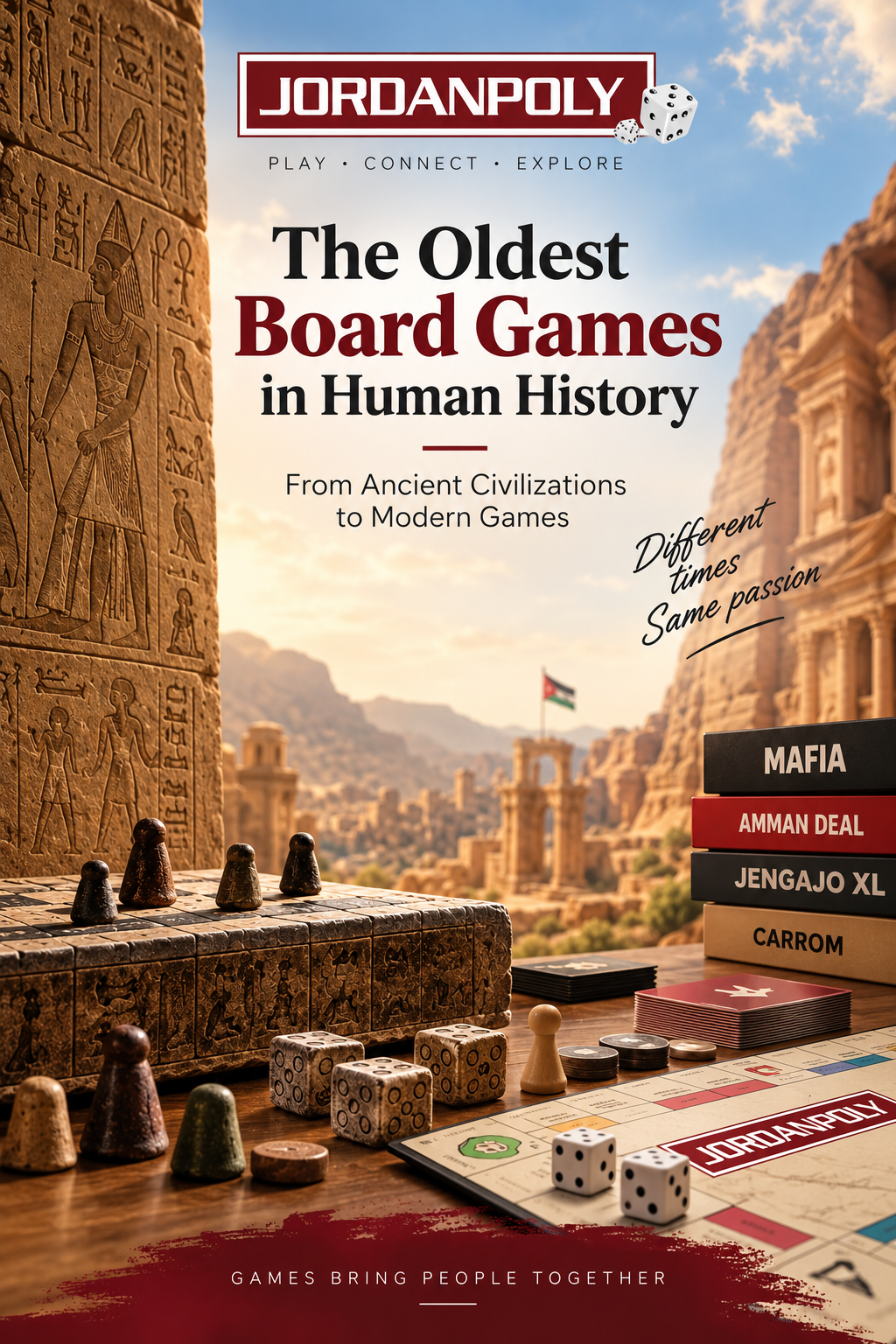
Long before smartphones, video games, and digital entertainment became part of everyday life, people were already gathering around boards to play, compete, and challenge one another.
Board games are not a modern invention. Archaeological discoveries have revealed boards, pieces, dice, and other gaming objects that date back thousands of years. These discoveries show that playing games was already part of human societies in some of the world’s earliest civilizations.
From ancient Egypt to Mesopotamia, people created games that involved movement, rules, strategy, competition, and sometimes an element of chance. Although the games themselves have changed dramatically over time, many of the basic ideas behind them remain familiar today.
The Oldest Board Games Known to Humans
Some of the earliest known board games appeared in ancient civilizations more than four thousand years ago. Among the most famous examples are Senet from ancient Egypt and The Royal Game of Ur from ancient Mesopotamia.
These games were created long before the modern concept of entertainment existed in its current form. Yet their boards and playing pieces demonstrate that people were already developing structured ways to compete and spend their free time.
The existence of these games also tells us something important about ancient societies. Games required players to understand rules, make decisions, move pieces, and respond to the actions of other players. In other words, people were enjoying many of the same basic elements that make board games interesting today.
Senet: An Ancient Egyptian Board Game
One of the most famous ancient board games is Senet, which originated in ancient Egypt. Evidence suggests that the game dates back to the third millennium BCE, making it one of the oldest known board games in history.
Archaeologists have discovered Senet boards in ancient Egyptian sites and tombs, while depictions of the game also appear in Egyptian artwork.
The game was played on a rectangular board divided into thirty squares. Players moved their pieces across the board according to the rules of the game, with movement involving an element of chance as well as decision-making.
The exact rules of the earliest versions of Senet are not completely known today. Researchers have used archaeological evidence and later historical references to reconstruct possible versions of the game, but some details remain uncertain.
This uncertainty makes Senet even more fascinating. Thousands of years later, we can find the physical remains of the game, but we cannot know every detail about how every ancient player experienced it.
The Royal Game of Ur
Another remarkable example is The Royal Game of Ur, discovered in the ancient Mesopotamian city of Ur.
Some of the best-known examples were discovered during archaeological excavations of the Royal Cemetery at Ur and date to approximately the early second millennium BCE or earlier, depending on the specific set.
The game included a decorated board, playing pieces, and objects used to determine movement. Like many ancient games, it appears to have combined chance and decision-making.
The Royal Game of Ur is particularly interesting because researchers have been able to reconstruct a possible set of rules based on archaeological evidence and historical sources. Modern experiments with reconstructed versions have also demonstrated how the game could function as a competitive race game.
Its discovery provides a remarkable connection between modern players and people who lived thousands of years ago.
Mehen: The Game Shaped Like a Snake
Ancient Egypt also gave us another unusual game known as Mehen.
Unlike the rectangular boards associated with many other games, Mehen was played on a board designed in the shape of a coiled snake. The game takes its name from Mehen, a serpent deity in ancient Egyptian mythology.
Mehen appears in archaeological evidence from early periods of Egyptian history. However, unlike some other ancient games, its original rules remain uncertain.
The unusual design of the board shows just how creative ancient game makers could be. They were not simply creating flat surfaces for moving pieces; they were designing visual worlds with their own shapes and meanings.
Games Were More Than Just Entertainment
One of the most interesting questions surrounding ancient board games is why people played them in the first place.
It would be easy to assume that games existed simply to help people pass the time. However, games can also involve strategy, planning, decision-making, competition, social interaction, and learning.
Ancient games provided players with structured challenges. A player had to understand the rules, decide what move to make, react to changing circumstances, and sometimes deal with unexpected outcomes.
These elements are still central to modern board games.
Games also created opportunities for people to interact. Sitting across from another person and competing through a shared set of rules creates a different type of social experience from many other activities.
The Role of Chance and Strategy
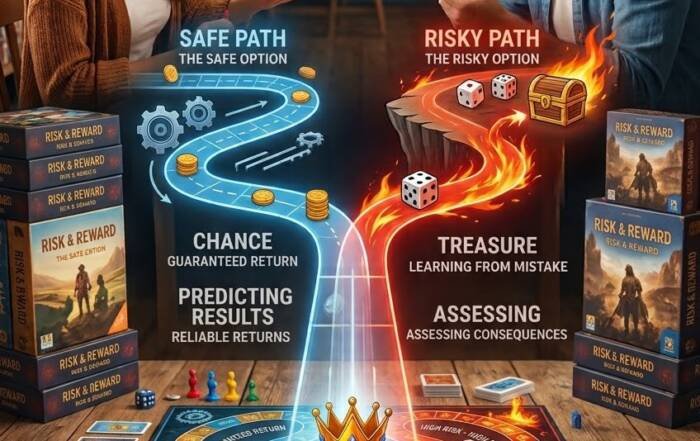
A fascinating feature of many ancient games is the combination of chance and strategy.
Objects such as dice or other randomizing tools could determine certain aspects of movement. At the same time, players still had to make decisions about how to use the opportunities presented to them.
This combination remains popular in modern board games.
Pure strategy can create intense competition, while pure chance can make a game unpredictable. Combining the two creates a different experience in which players must make decisions without knowing exactly what will happen next.
This balance between control and uncertainty is one of the reasons board games have remained popular for thousands of years.
What Ancient Games Tell Us About Human Nature
The history of board games reveals something surprisingly simple about humans: we have always enjoyed challenges.
Thousands of years ago, people were creating systems that allowed them to compete, make decisions, take risks, and experience victory or defeat.
The materials have changed. Ancient players used carved wood, stone, clay, and other materials, while modern games can use printed boards, plastic pieces, cards, and advanced designs.
But the basic experience remains remarkably familiar.
A group of people gathers.
A game is placed on the table.
The rules are explained.
The first move is made.
And suddenly, everyone wants to win.
From Ancient Boards to Modern Games
Over thousands of years, board games continued to evolve. Different civilizations developed their own games, rules, pieces, and styles of play.
Some games disappeared completely. Others influenced later games. New forms of chess, dice games, card games, strategy games, and family games continued to emerge across different cultures.
Today, board games have become an enormous global industry, with games designed around strategy, storytelling, history, economics, teamwork, competition, and countless other themes.
Yet despite all these changes, the basic concept remains surprisingly close to the games played by ancient civilizations.
Players still sit around a table.
They still move pieces.
They still follow rules.
And they still experience the excitement of not knowing who will win.
From Ancient History to Jordan Poly
The long history of board games shows that playing together is not simply a modern trend. It is a tradition that has continued across generations and civilizations.
Today, companies such as Jordan Poly continue this tradition by creating and offering modern board games that bring people together through competition, strategy, and entertainment.
Jordan Poly offers a variety of modern board and tabletop games, including Jordanpoly, Mafia, Amman Deal, Carrom, Jengajo XL, The Fast Sling, and other games designed for different playing styles and groups.
In this way, modern board games can be seen as part of a much longer story. The boards may look different, the pieces may be more colorful, and the rules may be more advanced, but the fundamental idea remains the same.
From ancient Egypt and Mesopotamia to modern Jordan, people have continued to gather around games to compete, think, laugh, and create shared experiences.
Thousands of years may separate an ancient player from someone sitting around a Jordan Poly game today, but the experience connects them through one simple idea:
Sometimes, all it takes is a board, a few pieces, and a group of people ready to play.









Leave A Comment