
Have you ever finished a board game, packed everything away, and then heard someone say, “Let’s play again”?
It is a simple moment, but it raises an interesting question: Why do some games make us want to play them again and again?
A board game can be entertaining the first time because everything feels new. We discover the rules, explore the board, learn how the pieces work, and experience the excitement of competition. But after that first game, the novelty disappears. So what makes players come back?
The answer is replayability.
Replayability is the ability of a game to remain enjoyable and engaging even after players already know how it works. A highly replayable game does not necessarily need completely different rules every time. Instead, it creates enough variation, decision-making, interaction, and uncertainty to make each session feel like a new experience.
For board game designers, replayability is one of the elements that can turn a simple game into an experience players want to return to.
What Does Replayability Really Mean?
Replayability is more than simply being able to play a game more than once.
Almost any board game can technically be played again. The real question is whether players want to play it again.
A game with strong replayability gives players a reason to return. The next session may offer a different outcome, a new strategy, a different challenge, or simply a different story created by the players around the table.
This is especially important in games based on interaction and decision-making. When players influence what happens during the game, the experience can change every time.
Even when the board and rules remain the same, the people playing, the decisions they make, and the situations they encounter can create a completely different session.
1. Every Game Can Tell a Different Story
One of the biggest reasons people replay board games is that every session can develop differently.
Imagine playing the same game with the same group of friends. In the first game, one player might take an aggressive approach. In the next game, they may decide to play more carefully. Another player might discover a new strategy after learning from the previous session.
Suddenly, the same game feels different.
The board may not have changed, but the story of the game has.
This is one of the strengths of interactive games. Players are not simply watching a predetermined sequence of events. Their decisions help shape what happens next.
A surprising move, an unexpected opportunity, or a risky decision can completely change the direction of a game.
That uncertainty creates curiosity about what might happen next time.
2. Strategy Gives Players Something New to Discover
Replayability is strongly connected to strategy.
During a first game, players are often focused on understanding the basic rules. They are learning what they can do and discovering which decisions matter.
By the second or third game, something changes.
Players already understand the fundamentals, so they can start thinking more deeply.
They may ask themselves:
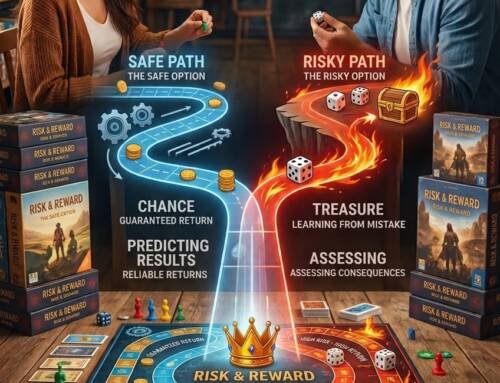
• Should I take a risk or play safely?
• Should I focus on short-term gains or long-term advantages?
• Should I change my strategy based on what my opponents are doing?
• Is there another way to approach the game?
This process creates a sense of discovery.
A replayable game allows players to improve their understanding over time. The more they play, the more they notice.
That feeling of learning something new can be one of the strongest reasons to return to a game.
3. The Human Factor Changes Everything
A board game is not only about the board, cards, pieces, or rules.
It is also about the people playing.
Different players make different decisions. Some take risks. Others prefer careful planning. Some focus on winning quickly, while others spend more time watching what their opponents are doing.
Because of this, playing the same game with different people can create completely different experiences.
Even the same group can behave differently from one session to another.
Players learn from previous games. They remember successful strategies, recognize patterns, and anticipate the moves of their opponents.
This creates an interesting cycle:
Play → Learn → Adapt → Play Again.
The experience develops as the players develop.
4. The Role of Luck and Uncertainty
Not every outcome in a board game should be completely predictable.
Elements such as cards, dice, random events, or unexpected moves can introduce uncertainty into the experience.
This does not mean that a game should depend entirely on luck.
In many engaging games, uncertainty works alongside decision-making. Players may not know exactly what will happen, but they can still decide how to respond.
This creates an interesting balance.
A player might have a plan, but an unexpected event can force them to change it. Instead of following the same path every time, they need to adapt to the situation in front of them.
That unpredictability can make each session feel fresh.
5. The Challenge Changes as Players Improve
A game can become more interesting as players become better at it.
During the first session, the challenge may simply be understanding the rules.
Later, the challenge becomes mastering the game.
This is an important part of replayability because players can gradually move from basic participation to deeper strategic thinking.
A player who struggled during their first game may understand the mechanics better the next time. They may recognize mistakes, improve their decisions, and try a new approach.
The game has not necessarily become easier.
The player has become better.
That sense of progress gives players another reason to return.
6. Balance Keeps the Experience Interesting
Replayability also depends on balance.
If one strategy always guarantees success, players may quickly discover that there is little reason to experiment.
On the other hand, if the outcome feels completely random, players may feel that their decisions do not matter.
A well-balanced game gives players meaningful choices while still leaving room for uncertainty.
This creates a situation where players can think:
“Maybe I can do better next time.”
That sentence is powerful.
It turns a finished game into motivation for another one.
7. Different Strategies Create Different Experiences
One of the most effective ways to increase replayability is to allow players to approach the game in different ways.
A player might choose a defensive strategy in one session and an aggressive strategy in another.
Another player might focus on collecting resources, while someone else focuses on negotiation, competition, or long-term planning.
When multiple approaches can lead to interesting outcomes, players have more reasons to experiment.
They are not simply repeating the same experience.
They are testing new possibilities.
This is where replayability becomes connected to creativity. Players are not only following the rules; they are exploring what they can do within those rules.
8. The “One More Game” Effect
There is a special moment that many board game players know well.
The game ends.
Someone looks at the table.
Then comes the question:
“One more game?”
Why does this happen?
Sometimes the game was close. A player may feel they were only one decision away from winning. Other times, someone may have discovered a new strategy they want to test.
Perhaps the group simply enjoyed the interaction and wants to experience it again.
Whatever the reason, the desire for another round is a sign that the game has created curiosity.
The players are no longer asking, “What is this game?”
They are asking:
“What could happen if we play again?”
That is the heart of replayability.
9. Replayability Creates Long-Term Value
A game that is enjoyable only once may provide a memorable experience, but a game that remains enjoyable over many sessions can become part of people’s routines and memories.
It can become the game friends bring out during gatherings.
It can become the game a family returns to during weekends.
It can become the game people recommend to others because they know it will create another enjoyable experience.
This is one reason replayability matters so much in board game design.
The value of a game is not necessarily determined by how long one session lasts. It can also be measured by how many different experiences the game can create over time.
10. What Makes a Board Game Truly Replayable?
There is no single formula that guarantees replayability.
However, several elements can work together to create it:
• Meaningful decisions
• Different possible strategies
• Player interaction
• Uncertainty and surprises
• Balanced gameplay
• Opportunities to improve
• Different possible outcomes
• A sense of progression
• Enough variety to prevent repetition
• A reason to try “one more game”
When these elements work together, players are more likely to feel that each session offers something worth discovering.
Replayability Is About More Than Playing Again
The best replayable games do not simply ask players to repeat the same experience.
They give players a framework where new experiences can emerge from the same rules.
The board may remain the same. The cards may remain the same. The rules may remain the same.
But the decisions change.
The players change.
The strategies change.
And the story changes.
That is what makes replayability so fascinating.
Jordan Poly’s collection includes different types of games built around competition, strategy, interaction, and changing possibilities. From board games and card games to games designed for direct player interaction, the experience can develop differently depending on the players and the choices they make.
For example, AMMAN DEAL uses a large collection of cards and different possible combinations to create varied gameplay, giving players opportunities to make different decisions from one session to another.
Ultimately, the real test of a game is not only whether players enjoy the first round.
It is whether, after the final move, they look at the board and think:
“Let’s play again.”
And perhaps that is the simplest definition of a truly replayable game.











Leave A Comment