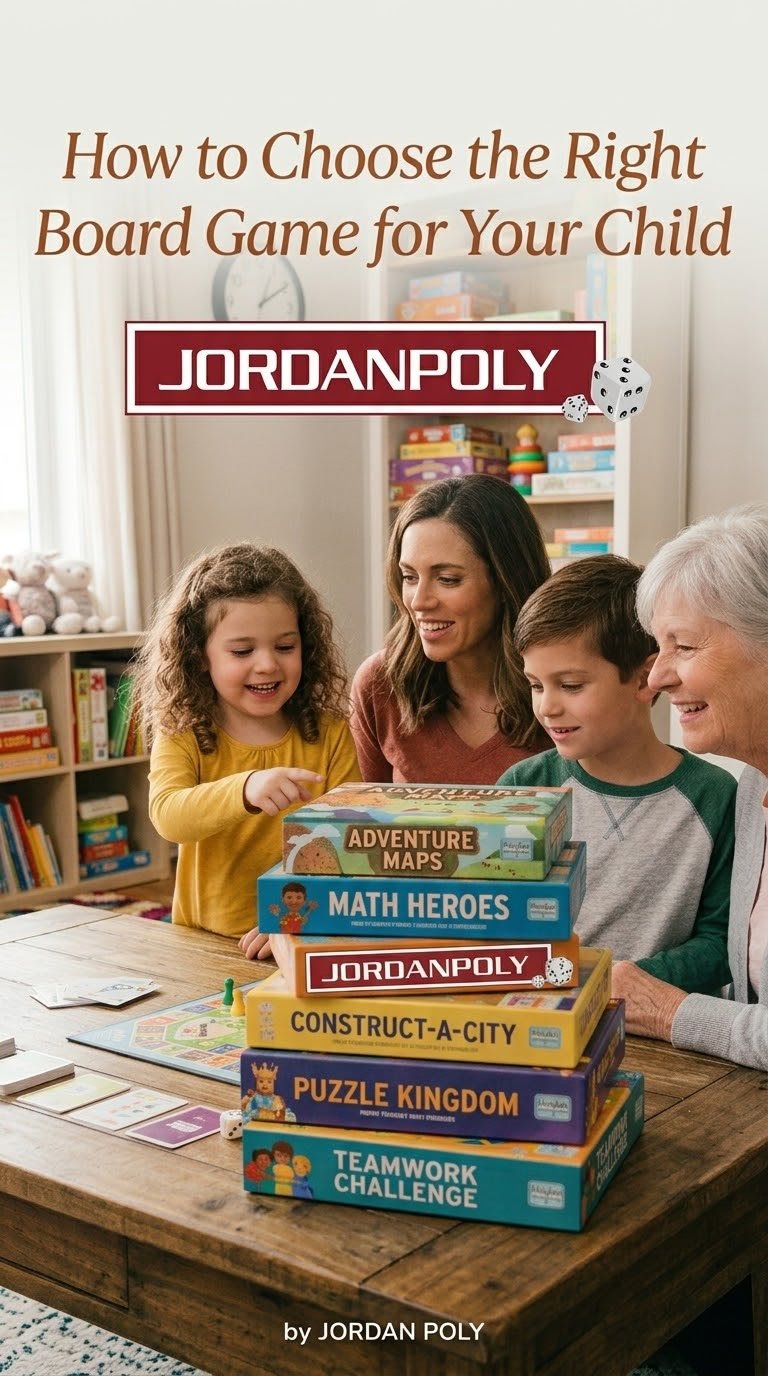
A board game can be much more than a way to have fun and pass the time. It can give children opportunities to learn, think, communicate, solve problems, and interact with others in an enjoyable and natural way.
Before buying a board game, parents should consider several factors, including the child’s age, the number of players, the difficulty level, the expected playing time, and the skills the game can help develop.
Why Is Choosing the Right Board Game Important?
Every child is different. A game that is enjoyable for a six-year-old may not be suitable for a three-year-old. Similarly, a child who enjoys competition and strategy may prefer a completely different game from a child who enjoys fast-paced and simple activities.
When a game matches a child’s abilities and interests, it can encourage:
* Interaction and participation
* Problem-solving skills
* Focus and concentration
* Communication
* Patience and turn-taking
* Teamwork and cooperation
* Screen-free entertainment
The goal should not simply be to buy a fun game. The goal is to choose an experience that matches the child and encourages them to play, learn, and interact.
1. Start With Your Child’s Age
Age is one of the most important factors to consider when choosing a board game.
Games designed for younger children usually have simpler rules and fewer steps, while older children may be able to enjoy games with more complex rules and strategic elements.
When choosing a game, check the recommended age range provided by the manufacturer. However, age should not be the only factor.
Two children of the same age can have different levels of:
* Concentration
* Understanding of rules
* Previous gaming experience
* Personal interests
* Ability to handle competition
For this reason, it is better to consider both the child’s age and their individual abilities.
2. Consider the Game’s Difficulty Level
If a game is too easy, a child may become bored quickly.
On the other hand, if a game is too complicated, the child may become frustrated and lose interest.
The ideal game should provide an appropriate challenge without making the child feel that understanding the rules or participating is impossible.
Parents can start with games that have simple rules and gradually introduce more complex games as their child’s skills and experience develop.
3. Choose a Game Based on Your Child’s Interests
Does your child enjoy competition? Do they like fast-paced games? Are they interested in strategy and planning? Or do they prefer playing with other people?
Understanding your child’s interests can make choosing a game much easier.
For example, a child may prefer:
* Speed and reaction games
* Memory and concentration games
* Strategy and planning games
* Traditional games
* Card games
* Skill-based games
* Games that can be played with friends or family
When a game matches a child’s interests, they are more likely to enjoy it and return to it repeatedly.
4. Think About the Number of Players
Before buying a board game, consider how many people will normally play it.
Some games are designed for two players, while others are better suited for larger groups.
If the goal is to spend quality family time together, a game that allows several family members to participate may be a better choice.
If the child usually plays with a sibling or one friend, a game designed for a smaller number of players may be more suitable.
Choosing a game that matches the usual number of players can also increase the chances that it will be used regularly.
5. Do You Want an Educational or Entertainment Game?
Not every board game needs to be directly educational.
Children can learn many valuable skills through play, even when the main purpose of a game is entertainment.
Different games can encourage the development of:
Thinking Skills
Children may need to analyze different options and decide what to do next.
Problem-Solving Skills
Games can present challenges that require children to find solutions.
Concentration
Players need to pay attention to the game and wait for their turn.
Communication
Many games encourage players to talk, explain ideas, and interact with others.
Teamwork
Some games require players to cooperate and work toward a shared goal.
This makes board games a great way to combine learning and entertainment rather than treating them as separate activities.
6. Consider the Playing Time
The length of a game is particularly important for younger children.
If a game takes too long, a child may lose concentration before the game is finished.
Shorter games can be a better option for children who find it difficult to stay focused on one activity for a long period.
Parents can choose the playing time based on the child’s age, attention span, and experience.
Games that allow players to finish a round relatively quickly can also be replayed several times, making the experience more flexible.
7. Choose a Game That Encourages Interaction
One of the main advantages of board games is their ability to bring people together around the same activity.
Look for games that encourage children to:
* Communicate with others
* Wait for their turn
* Listen to other players
* Follow rules
* Express their ideas
* Handle winning and losing
* Cooperate and compete respectfully
These elements make the game more than simple entertainment. They turn it into a social experience as well.
8. Don’t Make Winning the Only Goal
A common mistake is treating the main purpose of a game as winning.
For children, it is important to learn how to enjoy the experience itself.
Playing can teach children that winning and losing are natural parts of competition and that the final result is not always the most important part.
Parents can ask questions such as:
* Did you enjoy the game?
* What did you like most?
* What would you try differently next time?
* Would you like to try another strategy?
This approach turns playing into an opportunity to learn and experiment instead of creating unnecessary pressure.
9. Choose a Game the Whole Family Can Enjoy
If the goal is to increase family interaction, consider choosing a game that allows several family members to participate.
Family games can bring parents, children, and siblings together around one activity and create opportunities for communication away from phones and other digital devices.
Over time, playing together can even become a family tradition, such as having a dedicated game night once a week.
10. Choose a Game That Can Be Played More Than Once
Some games may be exciting the first time but become repetitive after a few rounds.
Other games can be played many times while still providing a different experience.
When choosing a game, consider whether:
* The gameplay can change from one round to another
* Different outcomes are possible
* Players can try different strategies
* The game can be enjoyed with different people
The more replayable a game is, the greater its long-term entertainment value can be.
11. Consider Games for Indoor Activities
Board games are a practical option for indoor entertainment, especially during weekends, school holidays, or days when children need an activity away from screens.
Families can create a small space at home for games and keep them somewhere that children can easily access.
This can encourage children to choose a different activity instead of spending long periods on phones, tablets, or other digital devices.
12. Pay Attention to Game Quality and Safety
When buying a game for children, parents should also consider the quality of the materials, the design of the pieces, and whether the game is appropriate for the recommended age group.
Always follow the manufacturer’s instructions regarding age recommendations and safe use.
Small game pieces should also be kept away from young children who may put them in their mouths.
How Do You Know If a Board Game Is Right for Your Child?
Before buying a game, parents can use this simple checklist.
Ask yourself:
* Is the game appropriate for my child’s age?
* Is the difficulty level suitable?
* Does it match my child’s interests?
* How many people can play?
* How long does a typical game take?
* Does it encourage thinking or communication?
* Can the family play together?
* Can it be played repeatedly?
* Is it suitable for our home environment?
* Does it follow appropriate safety and age guidelines?
If most of the answers are positive, the game may be a good match for your child.
Board Games as a Fun Alternative to Screen Time
Digital devices have become an important part of children’s everyday lives, and many parents are looking for activities that can help create a better balance between screen time and other forms of entertainment.
Board games can be one of these alternatives.
They give children opportunities to interact face-to-face, think strategically, compete, cooperate, and spend quality time with family and friends.
This does not mean that digital entertainment needs to disappear from a child’s life. Instead, board games can provide another enjoyable option and help create a more balanced range of activities.
Choosing the right board game for your child is not only about the appearance of the game or how popular it is.
Age, difficulty level, personal interests, number of players, playing time, and the skills encouraged by the game are all important factors to consider.
Most importantly, choose a game that makes your child want to participate, explore, and interact.
The best board game is not necessarily the most complicated or the most popular one. It is the game that fits the child and gives them an opportunity to have fun, learn, and spend meaningful time with the people around them.












Leave A Comment