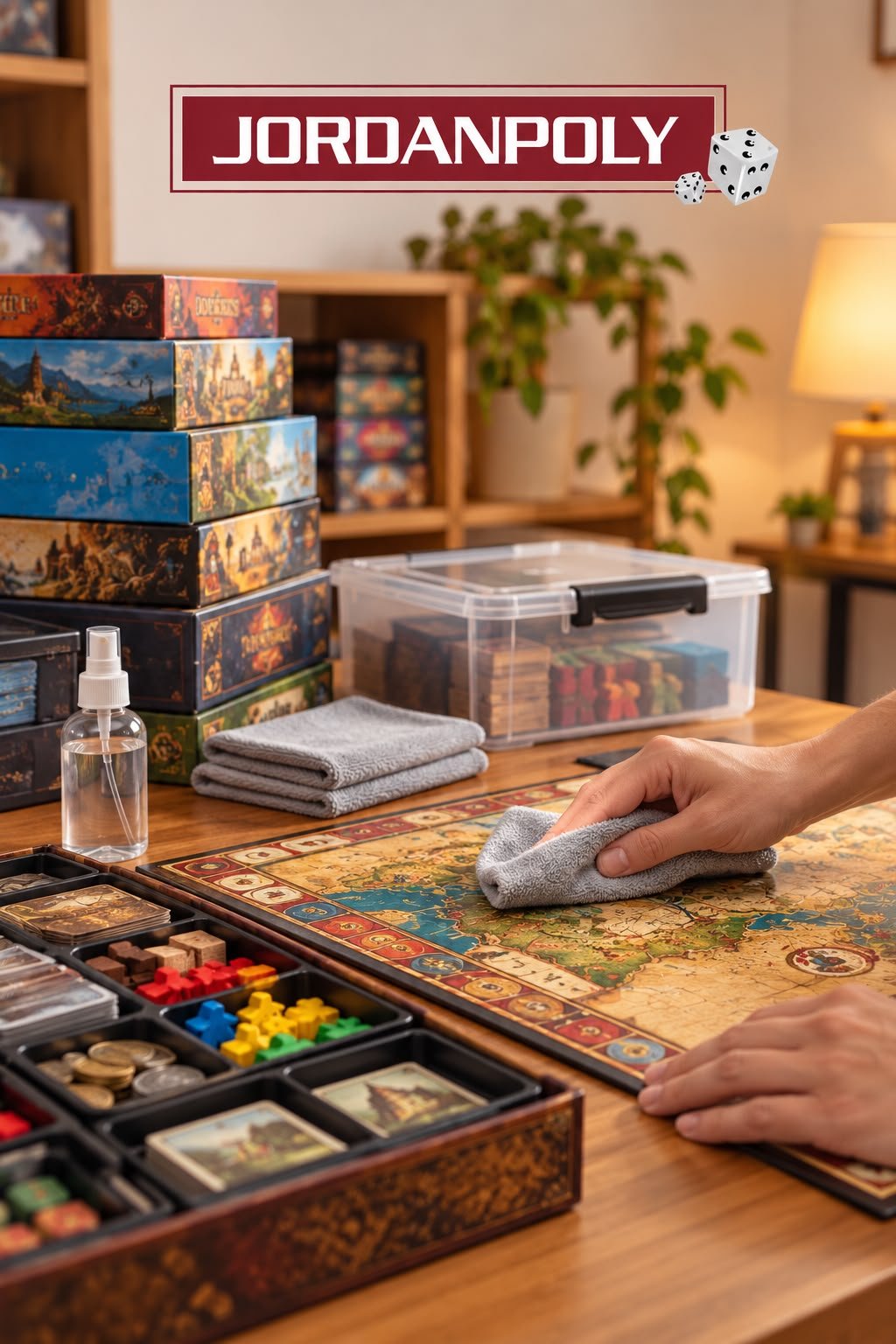
A board game can provide years of entertainment when its components are handled and stored carefully. Cards can bend, boxes can weaken, small pieces can go missing, and moisture or dust can damage materials over time. Protecting a collection does not require an expensive storage system. A few practical routines—sorting pieces after play, keeping boxes dry, and checking components periodically—can help games stay organised and ready for the next session.
Why Proper Storage Matters
- Protects components: Careful storage reduces the chance of bent cards, torn boards, cracked pieces, and damaged packaging.
- Makes setup faster: When cards, tokens, dice, and instructions have a clear place, players can begin quickly instead of searching.
- Prevents missing pieces: A consistent packing routine makes it easier to notice when something is missing before the box is put away.
- Keeps the collection organised: Labels and sensible shelf arrangements help household members find the right game without opening every box.
- Supports long-term use: Reducing unnecessary wear helps a game remain enjoyable across repeated sessions.
Choose the Right Storage Location
- Keep games away from moisture: Avoid damp basements, leaking cupboards, and areas where condensation forms. Moisture can warp cardboard and encourage mould.
- Avoid direct sunlight: Prolonged sunlight can fade printed boxes, cards, and boards. Store games in a shaded place when possible.
- Choose a stable temperature: A normal, dry indoor environment is generally preferable to areas with large temperature changes.
- Keep boxes off the floor: Shelves or a raised cabinet reduce exposure to spills, floor-level dust, and accidental kicks.
- Avoid excessive weight: Do not stack heavy items on delicate game boxes, especially those with inserts or crushable components.
- Make games easy to reach: Frequently played games should be accessible without pulling down a tall or unstable stack.
Organise Components Inside the Box
- Sort pieces by type: Keep cards, tokens, dice, miniatures, tiles, and other pieces grouped so they are easy to locate.
- Use suitable bags or containers: Small resealable bags or compartment organisers can prevent loose pieces from mixing. Choose sizes that fit without forcing the lid.
- Protect cards from bending: Store cards in a neat stack and avoid placing heavy components on top. Card sleeves may help with games played frequently.
- Keep the rulebook accessible: Place instructions where they can be removed without emptying the entire box.
- Use the original insert when practical: If the box includes a useful insert, use it to keep components in place. Simple dividers can help when it does not.
- Avoid overfilling: If the lid bulges or the box does not close comfortably, rearrange the contents instead of forcing it shut.
- Label expansion content: If a game has expansions, store related pieces together and label bags or dividers to make setup easier.
Clean Board Games Safely
- Read manufacturer guidance: Different materials require different care. Check product instructions before using any cleaning product.
- Use a dry, soft cloth for dust: For many boxes and non-electronic components, gentle dusting is a good first step.
- Clean hands before playing: Clean, dry hands reduce oils, food residue, and dirt transferring to cards and boards.
- Keep food and drinks away: Place refreshments on a separate surface to reduce spills and sticky pieces.
- Do not soak cardboard or paper: Boards, cards, and rulebooks can warp or tear if wet. Avoid applying liquid directly to these materials.
- Be cautious with disinfectants: Alcohol, sprays, and strong cleaners may damage inks, coatings, plastics, or finishes. Do not use them unless the manufacturer confirms they are suitable.
- Dry components fully: If a component is explicitly safe to clean with moisture, allow it to dry completely before storing.
- Clean the playing surface: A clean table or mat helps prevent dust and crumbs from getting into the game.
Care Tips for Different Components
- Cards: Hold cards with clean hands, avoid bending corners, and store them flat. Use compatible sleeves when appropriate.
- Game boards: Fold boards along their original creases only. Do not force a fold in the wrong direction or place heavy objects on uneven sections.
- Dice: Keep dice in a small bag or compartment so they do not scratch other components or disappear.
- Wooden pieces: Dust with a soft, dry cloth. Avoid soaking wood or exposing it to excess moisture.
- Plastic pieces and miniatures: Keep them in compartments or padded storage where possible. Avoid crushing delicate parts.
- Paper money and tiles: Keep paper components flat and away from sharp or heavy pieces that could crease or tear them.
- Electronic components: Remove batteries for long-term storage only when the manufacturer recommends it, and follow product-specific care instructions.
A Simple After-Game Packing Routine
- Count the components: Do a quick visual check for cards, dice, tokens, and other important pieces.
- Sort pieces into groups: Return each type of component to its designated bag or compartment.
- Check the playing area: Look under the table and around chairs for small pieces that may have fallen.
- Return cards and boards carefully: Place them flat and in the correct orientation to avoid bending or crushing.
- Put the rulebook back: Keeping instructions with the game makes future sessions easier.
- Close the box without force: If the lid does not fit, check whether a bag or component has been placed incorrectly.
- Return the game to its shelf: Store it in the designated location so everyone knows where to find it.
Organising a Larger Collection
- Group games by category: Separate family games, strategy games, party games, card games, and games for younger children.
- Arrange by frequency of use: Place the games you play most often within easy reach.
- Use visible labels: Labels on shelves or bins help family members return games to the correct location.
- Store smaller boxes together: Small card games can be grouped in a basket or labelled container, provided they remain easy to identify.
- Keep an inventory: A simple list can record each game, its location, and whether any pieces are missing.
- Review the collection periodically: Check for damaged boxes, loose pieces, and games that need reorganising.
- Consider child and pet safety: Some games contain small parts that may present choking hazards. Follow age guidance and store components safely.
What to Do if a Game Is Damaged or Missing Pieces
- Identify what is missing: Check the component list in the rulebook or product instructions before assuming a piece is lost.
- Search the usual play area: Look in storage bags, under furniture, and inside the box insert.
- Contact the manufacturer or seller: Ask whether replacement components are available, especially if the game is covered by support or warranty.
- Use temporary substitutes carefully: For casual play, a clearly distinguishable substitute may work if it does not change game balance or confuse players.
- Repair packaging gently: Use a suitable repair method for small box tears that will not risk damaging the components inside.
- Avoid permanent alterations: Painting, gluing, or modifying pieces may affect the game’s usability or value.
- Review occasionally: Repair small packaging problems early and reorganise shelves when needed.
- Check before closing: Look for pieces left on the table, floor, or inside the wrong compartment.
- Clean with care: Follow the manufacturer’s instructions and avoid unapproved liquids or chemicals.
- Protect delicate pieces: Keep cards flat and avoid placing heavy parts on top of them.
- Keep components grouped: Use suitable bags, trays, or dividers that fit the box.
- Choose a dry, shaded location: Avoid damp spaces and direct sunlight.
A Quick Board Game Storage Checklist
- When lending a game: Make a quick component check before lending it and explain how the pieces should be packed. A simple checklist can prevent confusion when it is returned.
- When moving home: Pack games in sturdy cartons, keep heavy objects from crushing them, and avoid leaving them in a hot vehicle or damp location.
- Before a special gathering: Open the selected game, verify that key components are present, and review the rules before guests arrive.
- Once a month: Dust the shelf, check boxes for damage, and make sure games are not being crushed by heavier items.
- After every session: Return components to their assigned compartments, check for missing pieces, and close the box without forcing it.
Creating a Simple Board Game Care Schedule
- Lost instructions: Keep the rulebook in the original box and store reference cards with the relevant game. If a digital rulebook is available from the publisher, save the official link for future use.
- Odours and moisture: Do not store games beside damp laundry, strong-smelling chemicals, or areas with poor ventilation. Make sure the storage location is dry before returning games.
- Scratched pieces: Separate hard components from delicate surfaces and avoid shaking a box when pieces are loose inside.
- Faded printing: Keep boxes and boards away from prolonged direct sunlight and strong indoor lighting where practical.
- Torn cardboard: Lift boards and inserts carefully instead of pulling them out by one corner. Repair small box tears before they spread.
- Bent cards: Avoid stuffing cards into an overfilled box or leaving them beneath heavy pieces. Store them flat and consider sleeves for frequently played games.
Preventing Common Types of Damage
- For long-term storage: Before putting a game away for months, check that all components are dry, clean, and protected from dust and dampness.
- For travel: Choose a compact game with secure packaging. Place loose pieces in sealed bags and keep the box inside a protective bag to reduce wear.
- For classrooms or community spaces: Use clearly labelled bins and a check-in routine so components can be counted and returned after group activities.
- For family rooms: Keep frequently used games in a reachable cabinet, away from food preparation areas and places where drinks are likely to spill.
- For small apartments: Use a single labelled shelf or sturdy storage cube, and place compact games vertically only when their contents are secured and the manufacturer’s packaging supports it.
Storage Solutions for Different Homes
Small habits make a big difference. Good board game care is mainly about consistency: store games in a dry place, protect delicate components, clean materials appropriately, and repack everything after play. These habits reduce damage, help prevent missing pieces, and make it easier to enjoy a favourite game again. Start with one shelf and one after-game routine, then build a system that suits your collection.







Leave A Comment