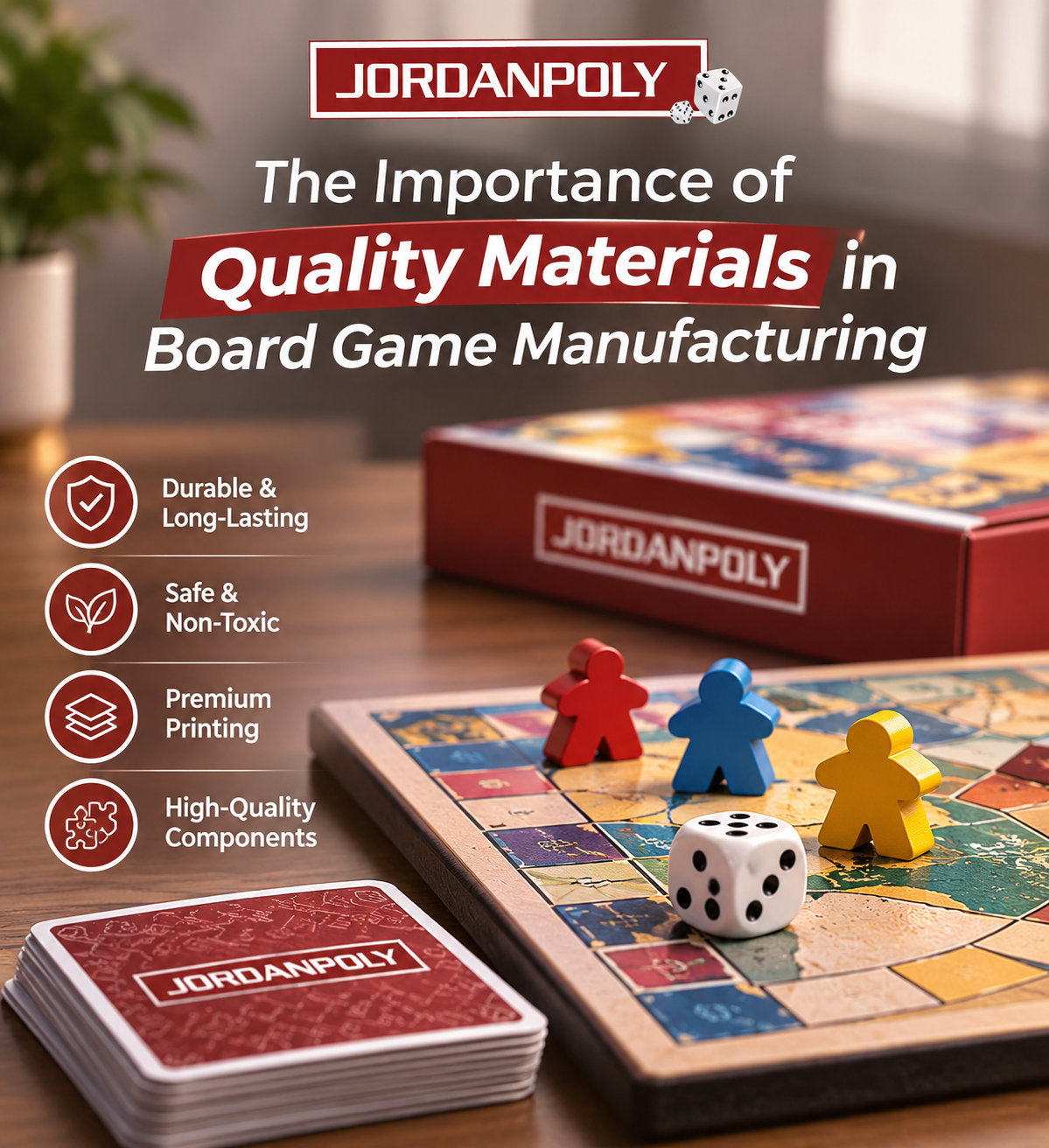
That is why choosing the right materials is an essential part of board game manufacturing. Material quality affects more than appearance: it can influence durability, ease of use, safety, and the overall impression players take away from a game. Whether a game is designed for families, schools, hobby players, or businesses, thoughtful material selection helps turn a creative concept into a reliable finished product.
1. Durability That Supports Repeated Play
A board game is made to be handled. Players shuffle cards, move pieces, fold boards, open boxes, and pack everything away after each session. If the materials are not suitable for regular use, components may bend, tear, fade, or wear out sooner than expected.
Durable materials help a game maintain its condition over time. A well-constructed board can resist repeated folding and handling, while appropriately finished cards can better withstand shuffling. Strong game pieces and well-made packaging also help protect the components between sessions.
Durability is especially important for games used in schools, community spaces, cafés, and other environments where many different people may play the same game. Selecting materials that match the expected frequency and style of use can make a meaningful difference to the product’s lifespan.
2. A Better Look and Feel
Players often form their first impression of a board game before the first turn begins. The colors, surface finish, thickness, texture, and weight of its components all contribute to the way the game is perceived.
High-quality printing can make illustrations, symbols, and instructions easier to read. Consistent color reproduction helps the different parts of a game feel connected, while clean cutting and accurate finishing give components a more polished appearance. The feel of cards, boards, and tokens can also make handling the game more comfortable.
These details should support the game’s purpose. For example, a game for younger players may benefit from large, easy-to-recognize visuals, while a strategy game may need clearly differentiated pieces and legible information. Good material and production choices help the design communicate effectively.
3. Safety and Suitability of Materials
Material selection should always take the intended audience and use of the game into account. Games designed for children, for example, require particular attention to component size, edges, coatings, inks, and other material characteristics.
Manufacturers should work with reputable suppliers and choose materials that are appropriate for the product and the markets where it will be sold. They should also consider relevant product-safety requirements and testing obligations. The exact standards depend on factors such as the intended age group, product design, and destination market.
Safety is not a detail to leave until the end of production. It should be considered during design and material selection, so that components can be created with both the player and the intended use in mind.
4. Precision in Printing, Cutting, and Assembly
Even good raw materials cannot guarantee a good finished game on their own. Production quality also depends on accurate printing, cutting, finishing, and assembly.
Cards need consistent dimensions so they can be shuffled and handled easily. Boards and punch-out pieces should be cut cleanly, and printed elements should line up with the design. Components that are meant to fit together should be checked for consistency. Clear, durable packaging helps keep the complete set organized and protected.
Quality checks at different stages of production can help identify problems before a game reaches the customer. Reviewing samples, checking component dimensions, inspecting print quality, and confirming that every item is included are practical steps in building a dependable product.
5. Choosing Materials for the Type of Game
There is no single material that is ideal for every board game. The right choice depends on the game’s mechanics, target audience, visual style, budget, expected lifespan, and production requirements.
A card-based game may place greater emphasis on card stock, surface finish, and print clarity. A game with a large playing surface may require a board that balances rigidity with convenient storage. Games with many tokens or playing pieces need components that are easy to distinguish and comfortable to handle.
Packaging deserves the same attention. A well-designed box should suit the size and weight of the components, protect them during storage and transportation, and make it easy for players to put everything away after use. Matching materials to the game’s real needs can support both function and value.
6. Quality Materials and Long-Term Value
Choosing materials based only on the lowest initial cost can create challenges later. Components that wear out quickly may affect customer satisfaction and the perceived value of the game. Poor print quality or packaging that does not protect the contents can also weaken the overall experience.
Considering quality from the beginning helps manufacturers balance cost, performance, and the expectations of the intended audience. It can also reduce avoidable production issues when specifications are clear and materials are tested before full production.
Long-term value is not simply about making every component as heavy or expensive as possible. It is about choosing materials that perform reliably, suit the game’s purpose, and create a satisfying experience at an appropriate price point.
Quality Begins with the Right Choices
Great board games are built from more than creative ideas and engaging rules. They also depend on the materials and production decisions that bring those ideas to life. Durable components, clear printing, suitable materials, precise finishing, and protective packaging all help create a game that players can enjoy with confidence.
For anyone developing a new board game, material selection should be part of the design process from the start. By considering how a game will be played, who will use it, and how its components need to perform, manufacturers can create products that look professional and stand up to repeated play.
At Jordan Poly, the journey toward a successful board game starts with understanding the idea, the players, and the details that make the final product work. When design and material choices come together thoughtfully, the result can be a more complete and rewarding gaming experience.










Leave A Comment