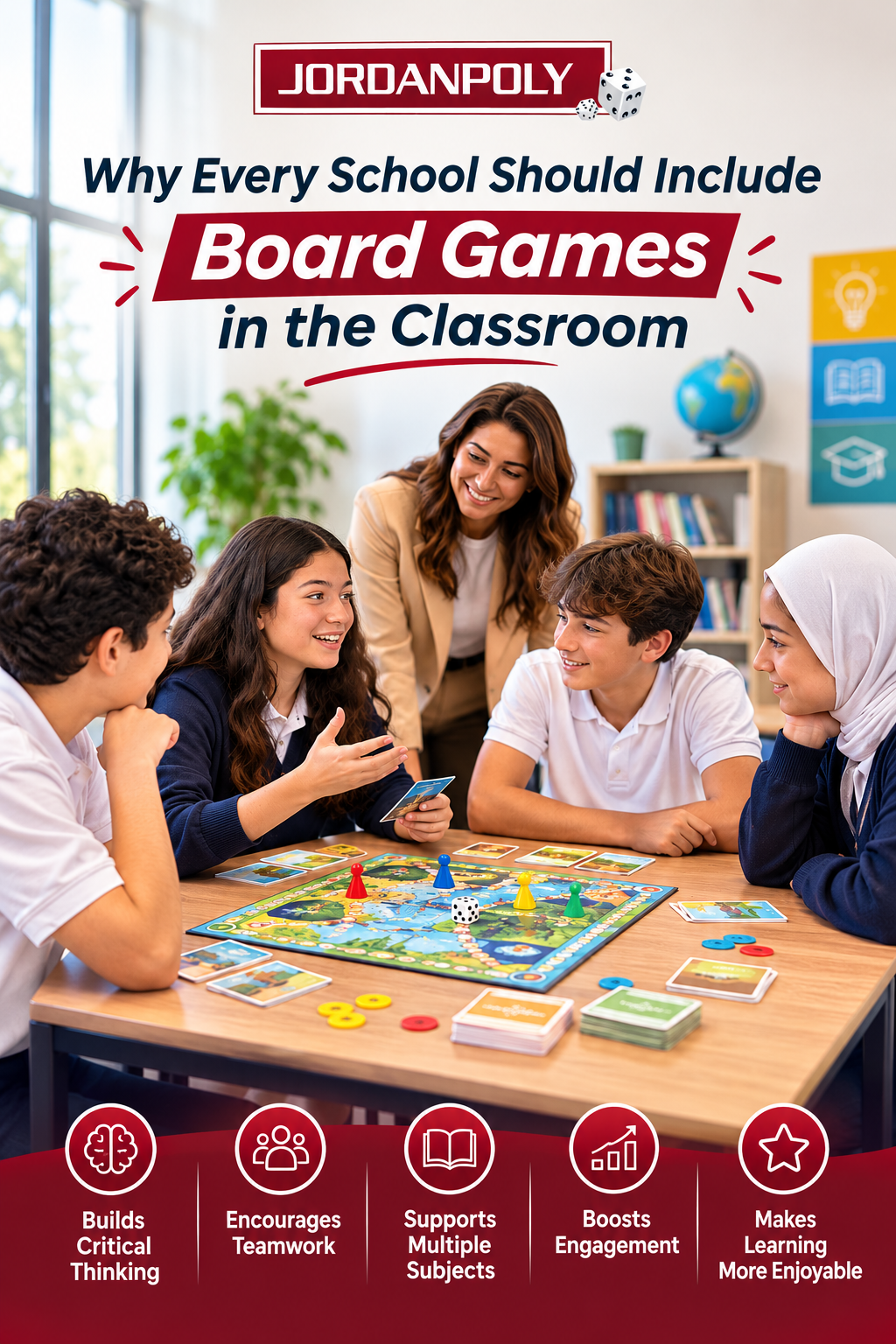
Education is constantly evolving, and schools are always looking for new ways to make learning more engaging, interactive, and effective. While textbooks, digital platforms, and traditional teaching methods remain important, introducing creative learning activities can give students a more enjoyable way to explore new ideas and develop essential skills.
One of the most effective ways to encourage active participation is through board games. More than just a source of entertainment, board games can create opportunities for students to think critically, solve problems, communicate with classmates, and learn through experience.
Including board games in the classroom does not mean replacing traditional education. Instead, it means adding another learning tool that helps students connect theoretical knowledge with practical activities.
1. Making Learning More Interactive and Enjoyable
One of the biggest challenges teachers face is keeping students interested and actively involved throughout a lesson.
Traditional classroom activities sometimes make students passive listeners rather than active participants. Board games introduce a different approach by encouraging students to become directly involved in the learning process.
Through playing, students can follow instructions, make decisions, answer questions, and participate in challenges. This creates a more dynamic classroom atmosphere where learning becomes an experience rather than simply receiving information.
For example, teachers can use educational board games to introduce vocabulary, practice mathematical concepts, or create classroom challenges related to different subjects.
2. Developing Critical Thinking and Problem-Solving Skills
Board games often require players to analyze situations, consider different possibilities, and make decisions based on available information.
These activities encourage students to think independently and develop problem-solving skills.
Instead of immediately receiving an answer from a teacher, students have the opportunity to explore solutions, test different strategies, and learn from their decisions.
Strategy-based games can also introduce students to concepts such as planning, logical thinking, and anticipating possible outcomes.
These skills are valuable not only in academic settings but also in everyday situations where students need to make thoughtful decisions.
3. Encouraging Teamwork and Communication
A classroom is a social learning environment, and students need opportunities to interact with one another.
Many board games involve group participation, shared objectives, and friendly competition. These experiences encourage students to communicate, exchange ideas, listen to different opinions, and work together toward a common goal.
During group activities, students can learn how to:
- Share ideas and explain their decisions.
- Listen respectfully to their classmates.
- Cooperate to achieve shared objectives.
- Take turns and respect agreed-upon rules.
- Handle winning and losing positively.
4. Supporting Learning Across Different School Subjects
One of the most interesting advantages of using board games in schools is their flexibility.
Games can be incorporated into different subjects and classroom activities, depending on the learning objectives and students’ ages.
Mathematics: Games involving numbers, counting, scoring, and strategic decisions can provide opportunities to practice mathematical thinking.
Language Learning: Word-based games and card activities can encourage vocabulary development, spelling practice, reading, and communication.
Science: Teachers can design challenges and interactive activities that introduce scientific concepts and encourage students to explore questions.
Geography and Social Studies: Board games involving locations, maps, resources, and decision-making can help students engage with geographical and social concepts.
The important point is to select activities that connect directly to the lesson’s objectives, rather than using games without a clear educational purpose.
5. Building Confidence and Encouraging Participation
Not every student feels comfortable participating in traditional classroom discussions. Some students may hesitate to answer questions or express their opinions in front of the entire class.
Board games can provide a more relaxed environment where students participate through actions, decisions, and group interactions.
As students become more familiar with the activities, they may feel more comfortable sharing ideas and contributing to group discussions.
Games also create opportunities for students to experience both success and challenges. Learning to try again, accept different outcomes, and improve their strategies can help build confidence and perseverance.
6. Creating a Positive and Collaborative Classroom Environment
A successful classroom is not only about academic performance. It is also about creating an environment where students feel comfortable participating, interacting, and learning together.
Board games can help teachers introduce enjoyable group activities that bring students together outside the usual classroom routine.
Friendly competitions, team challenges, and shared gaming experiences can make classroom interactions more positive.
Schools can also introduce dedicated game sessions during activity periods, extracurricular programs, or special school events.
These activities give students opportunities to interact with classmates in different ways while practicing cooperation and respect.
7. Helping Students Develop Patience and Respect for Rules
Every board game comes with rules, turns, and specific ways of participating.
By following these rules, students practice patience, self-control, and respect for others.
They learn that everyone deserves an opportunity to participate, that rules apply to all players, and that different outcomes are part of the experience.
These lessons can help reinforce positive classroom behavior and encourage students to understand the importance of fairness and responsibility.
8. How Schools Can Start Incorporating Board Games
Introducing board games into a school does not require completely changing the existing curriculum.
Schools can start with simple activities and gradually integrate games into different classroom settings.
Create a Classroom Game Corner: Dedicate a small space where students can access selected board games during appropriate activity periods.
Organize Weekly Game-Based Activities: Teachers can introduce one game session each week, connecting the activity to a specific learning objective.
Introduce Group Challenges: Divide students into small teams and organize friendly competitions that encourage communication, problem-solving, and participation.
Include Games in Extracurricular Programs: Board games can become part of school clubs, student activities, and recreational programs.
Choose Games According to Students’ Ages: Schools should consider the students’ age groups, abilities, interests, and educational needs when selecting suitable games.
The goal is to make games a meaningful addition to the educational environment, not simply another classroom distraction.
9. Choosing the Right Board Games for Your School
Not every game is suitable for every classroom. Schools should consider several factors before selecting board games for their students.
Age Appropriateness: Choose games that match students’ ages, developmental levels, and abilities.
Educational Value: Look for games that encourage skills such as logical thinking, communication, planning, and problem-solving.
Group Participation: Games that allow several students to participate can support collaborative learning.
Ease of Use: Clear instructions and simple gameplay make it easier for teachers to introduce activities without spending too much classroom time explaining complicated rules.
Variety: Including different types of games gives students opportunities to explore different skills and experiences.
By selecting games carefully, schools can create a collection of activities that supports both educational and recreational goals.
Make Learning an Experience Students Enjoy
Education should inspire curiosity, encourage creativity, and give students opportunities to explore the world around them.
Schools do not need to replace traditional teaching methods to benefit from game-based activities. They simply need to recognize that learning can happen in different ways, including through play, exploration, and collaboration.
At Jordan Poly, we believe that games bring people together and create meaningful experiences. As a Jordanian company specializing in board, card, wooden, and plastic games, we are passionate about making gaming experiences accessible to different audiences.
Whether your school is looking to introduce interactive activities, create a dedicated gaming space, or explore customized game ideas, board games can be a valuable addition to the educational environment.
Bring learning to life. Let students discover the joy of learning through play with Jordan Poly.












Leave A Comment